
Blog Post 22: Traveling Musician’s Essentials
Including! A Free Traveler’s Checklist***
*** When you sign up for my email newsletter
Thanks for stopping by, and welcome to my blog! I hope you had a great week. In this blog post, I will discuss:
✈️ Touring Realities: Lessons learned from a touring musician
✈️ Travel Optimization: Making the most of your time on the road
✈️ Pack Like a Pro: My essential gear for a disaster-free journey
Also, if you sign up for my email newsletter, I will send you my tried-and-true traveler’s checklist - handy every time you pack for a trip.



By the way, have you performed any of our CMP arrangements? If so, we would greatly appreciate it if you could leave a review. Click here to leave a review/comment on my CMP YouTube Channel. If you have posted a YouTube video of a CMP arrangement, do not forget to tag us on your channel, and we will tag you back. Thanks so much! Happy practicing!
Music Trivia Questions
Before we continue, here are three music trivia travel questions to challenge you; I will reveal the answers towards the end of this blog post. I hope you enjoy them.
🎶First, what is the most common type of mishap that traveling musicians experience?
🎶Second, what are the most crucial items a musician should pack when going on a concert tour?
🎶And third, what are some good resources for domestic or international travel advice?
Tell me your answers in the comments below, or feel free to share any other interesting travel tips you might know. Now, let’s continue with the topic at hand.
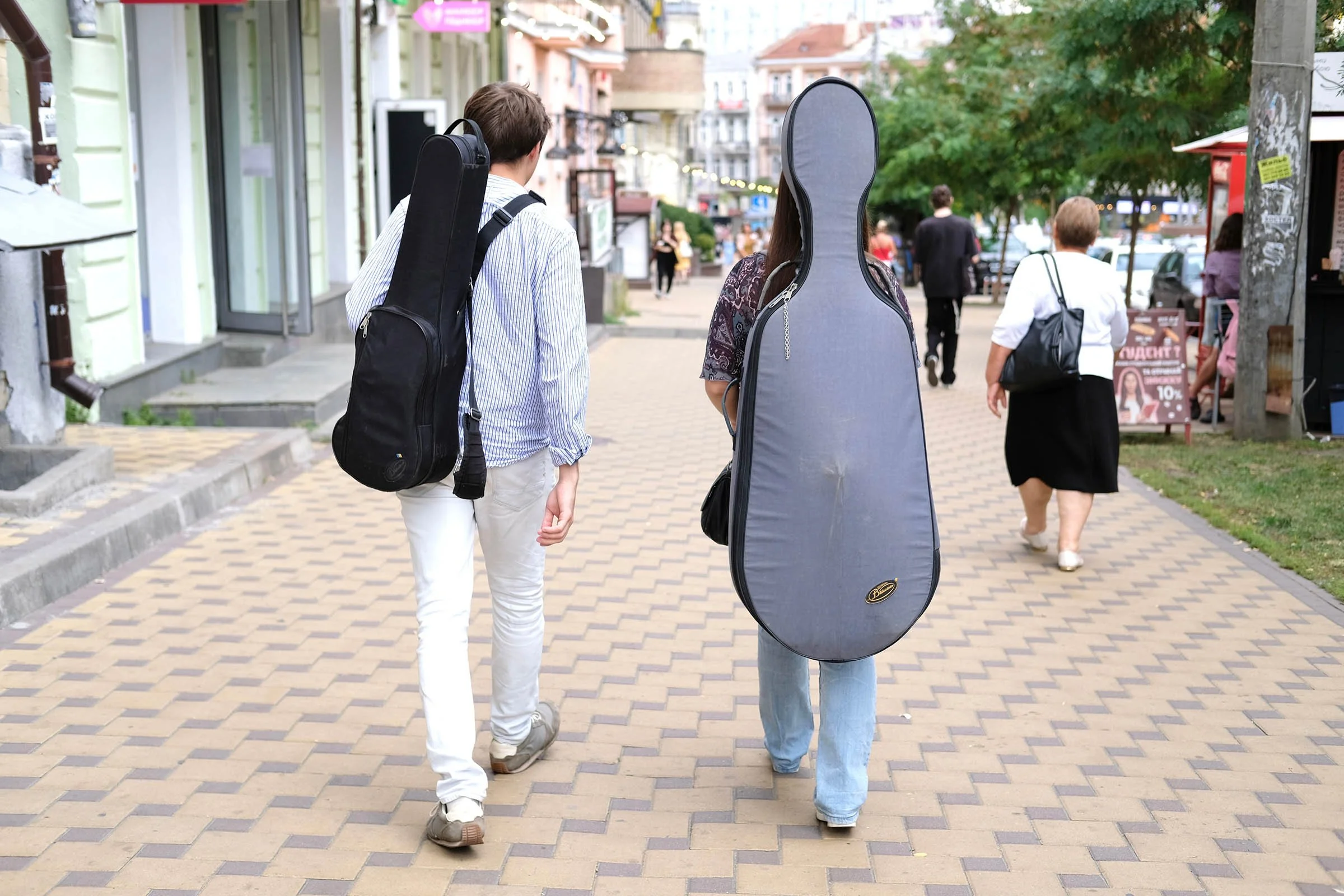
Musicians on the go. A good, sturdy traveling case is always an important travel essential for a musician. Also, wear comfortable shoes; you might have to do a lot of walking.
Shutterstock_2196653859
Lessons learned from a touring musician
For 24 years, I toured around the United States, Europe, Northern Africa, and Asia with the U.S. Air Force Bands. I started out at my first assignment near Boston, Massachusetts, with the Air Force Band of Liberty, stationed at Hanscom Air Force Base. Traveling throughout New England and New York State, the Air Force Band's mission is to inspire future musicians, connect with our audiences, and honor our country’s veterans. We played concerts, gave masterclasses, did instrument demonstrations (during Music in Our Schools Month), performed in formal ceremonies for the troops, and entertained communities throughout our touring zone. My next three assignments in Germany, California, and Texas would also see many more miles on the road, more concerts, master classes, ceremonies, and entertaining. In 24 years of touring the world, I had four assignments, performed in 30 countries and 45 states with 25 ensembles for over 120 million people, completed 210 concert tours totaling 880 days on the road with 11 different Air Force Bands, during which I visited roughly 1,500 cities. Along the way, I have learned a few lessons about travel.
First of all, be prepared. It always helps to have a plan: keep a checklist of items you will need as a traveling musician to help you do your gig and prevent mishaps and headaches; build an instrument repair kit for musical emergencies; and research your destination to make the most of your trip. Making a checklist of all music gear you will need is a great idea. For wind players, this would include your instrument (you’d be surprised how often people forget that!); a great hard-shell instrument case that can withstand a lot of travel, such as a BAM, Wiseman, Protec, or a nice Altieri case cover; accessories like mouthpieces, ligatures, reed caps, barrels, reeds/reedcases, a swab/cleaning cloth, pencils, cork grease, and bocals; mentronome or app; clip-on chromatic tuner or app; an instrument polishing cloth; a humidifying tube; a music stand light; and extras like mouthpieces (what happens if you drop your mouthpiece and it shatters?), reeds, bocals, etc. Don’t forget your music, too, plus those hard-copy music stands or tablets/stands (plus charging cords or a battery bank), and instrument stands, too. Customize your list to your specific needs.
That instrument repair kit for musical emergencies is going to save the day more times than you would care to remember. Put together a small case that contains mini screwdrivers for key adjustments; cigarette paper for leaks; a lighter to fix a leaky pad; rubber bands to temporarily fix bad/wonky keys; a spring hook for fixing those wonky springs that popped; some sandpaper or rush to adjust your reeds; key oil/bore oil for maintaining that beautiful instrument; Teflon tape for wrapping faulty corks; needle-nose pliers for making minor adjustments; a pipe cleaner for cleaning or applying oil; a tiny brush for cleaning your instrument; and chamois for absorbing moisture, regulating humidity and preventing scratches; and so on. Again, customize this kit for your needs.

Doing research and creating a checklist
Next, do some research on your destination. One great way to connect with your audience is to have a basic knowledge of their city and its notables. Demonstrating your knowledge of their city shows your desire to connect with people from different places and helps build bridges, especially with people to whom you may have no prior connection. This is particularly important if you are traveling overseas. Whenever you perform in a foreign country, you are representing the United States, your home state, your instrument, possibly your university, etc., and you are acting as a musical ambassador. There is a sense of responsibility that comes with that job. Do your research, learn about your destination, and try to connect with your audiences. Even if you can speak a few sentences in their language, that shows respect for their country and their culture and goes a long way toward making a positive impression, forging connections, and/or building bridges.
Finally, although you may be traveling for a specific performance or concert tour, there is no reason you cannot enjoy your local destinations along the way. Take some time to do research on the local amenities where you are performing. Inevitably, you will have some free time while on tour; if you don’t, take a few extra days in that new city to let you and your instrument acclimate. Make the most of it. Go on a local hike. Explore the local museum(s). Try the local cuisine. Go to the town square, sit in an outdoor café, and do some people-watching to better understand the area. If time permits, attend a local concert or sports event. If nothing else, walk around the central downtown area to get a feel for the place, the vibe, the architecture, and the people. Even a short walk around town will give you some exercise, fresh air, and a chance to chat with locals, and help you fully enjoy your travel destination. You get what you put into it. Take the time to enjoy your travels, and you will have a better overall experience.
Making the most of your time on the road
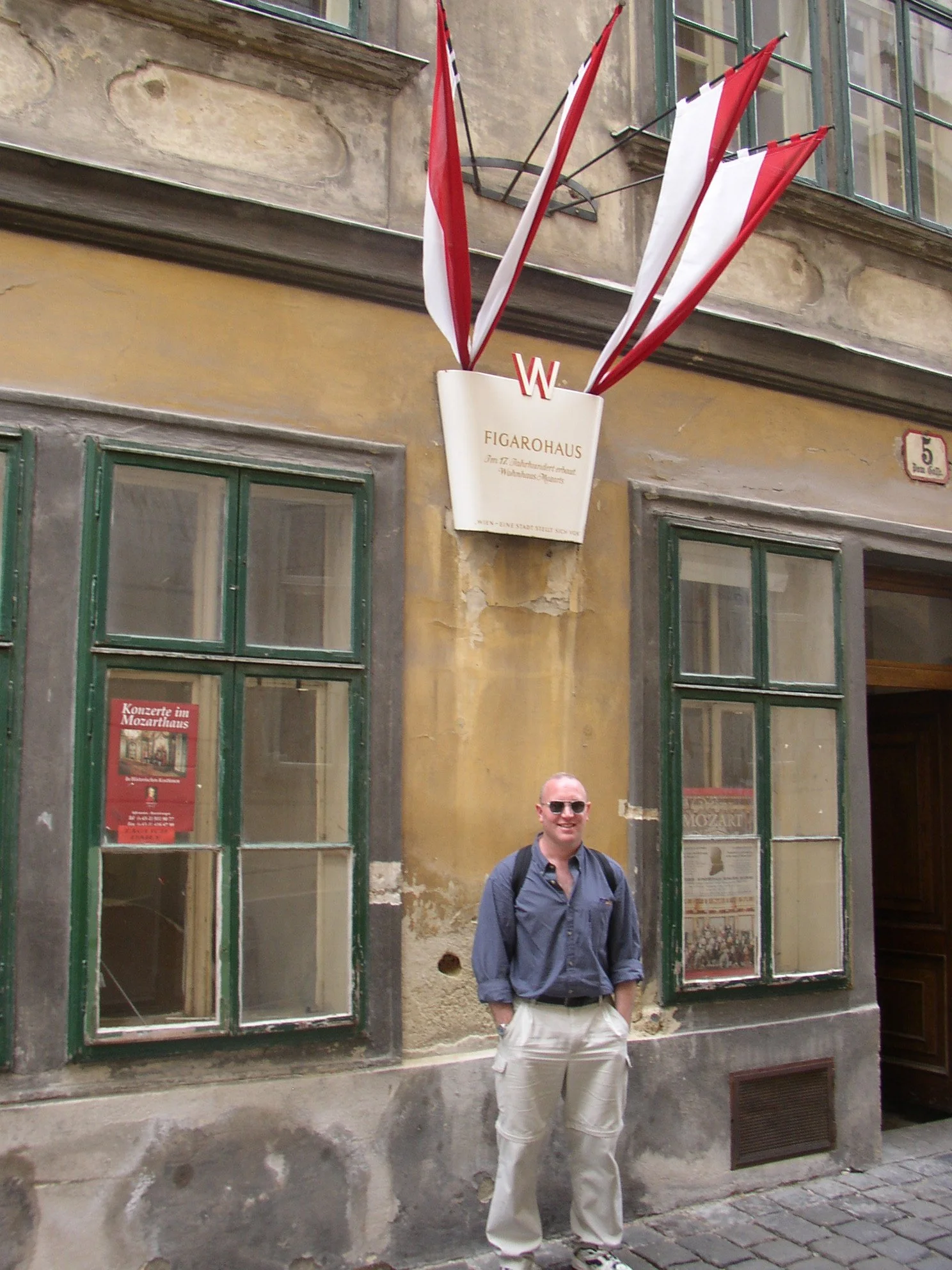
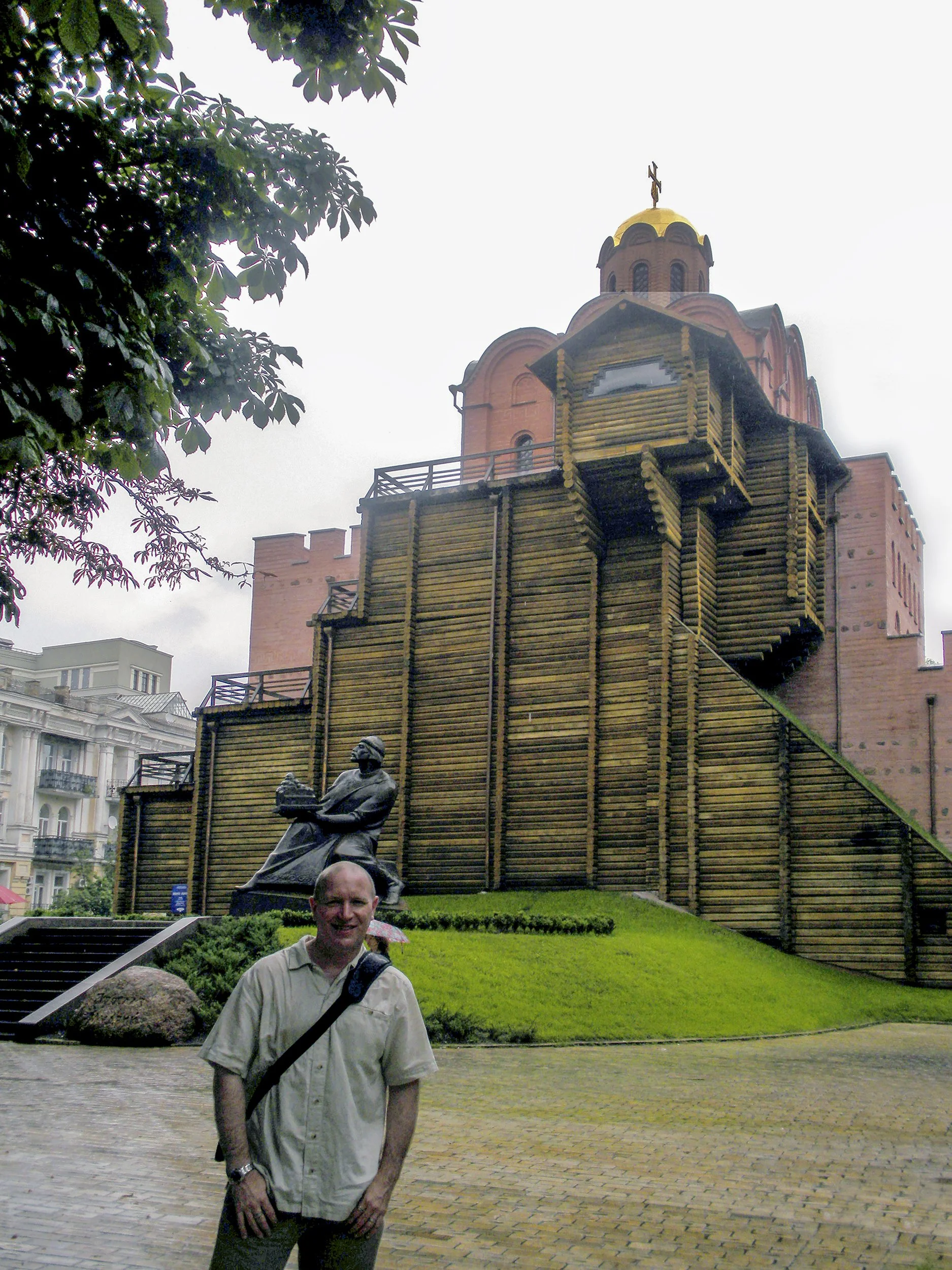


These pictures were taken throughout my travels in Europe while serving with the U.S. Air Forces in Europe Band at Sembach Air Base, Germany. I firmly believe you should make the most of your travels and see as much as you can while you are traveling. It will enrich your life and enhance your touring experience. The first picture is the Figarohaus, now called the Mozarthaus Vienna, which was Mozart’s residence from 1784 to 1787. He wrote his opera The Marriage of Figaro here, along with several piano concertos, string quartets, and his quintet for piano and winds. I took the second picture at the Great Gate or Golden Gate in Kyiv, Ukraine. This is located near downtown, and fortunately, I brought my Sony Discman (yes, it has been that long) and had cued up the final movement of Modest Mussorgsky’s iconic “Pictures at an Exhibition.” Standing at The Great Gate, listening to The Great Gate, is one of my fondest memories in all of my travels. For a musician, this was mecca.
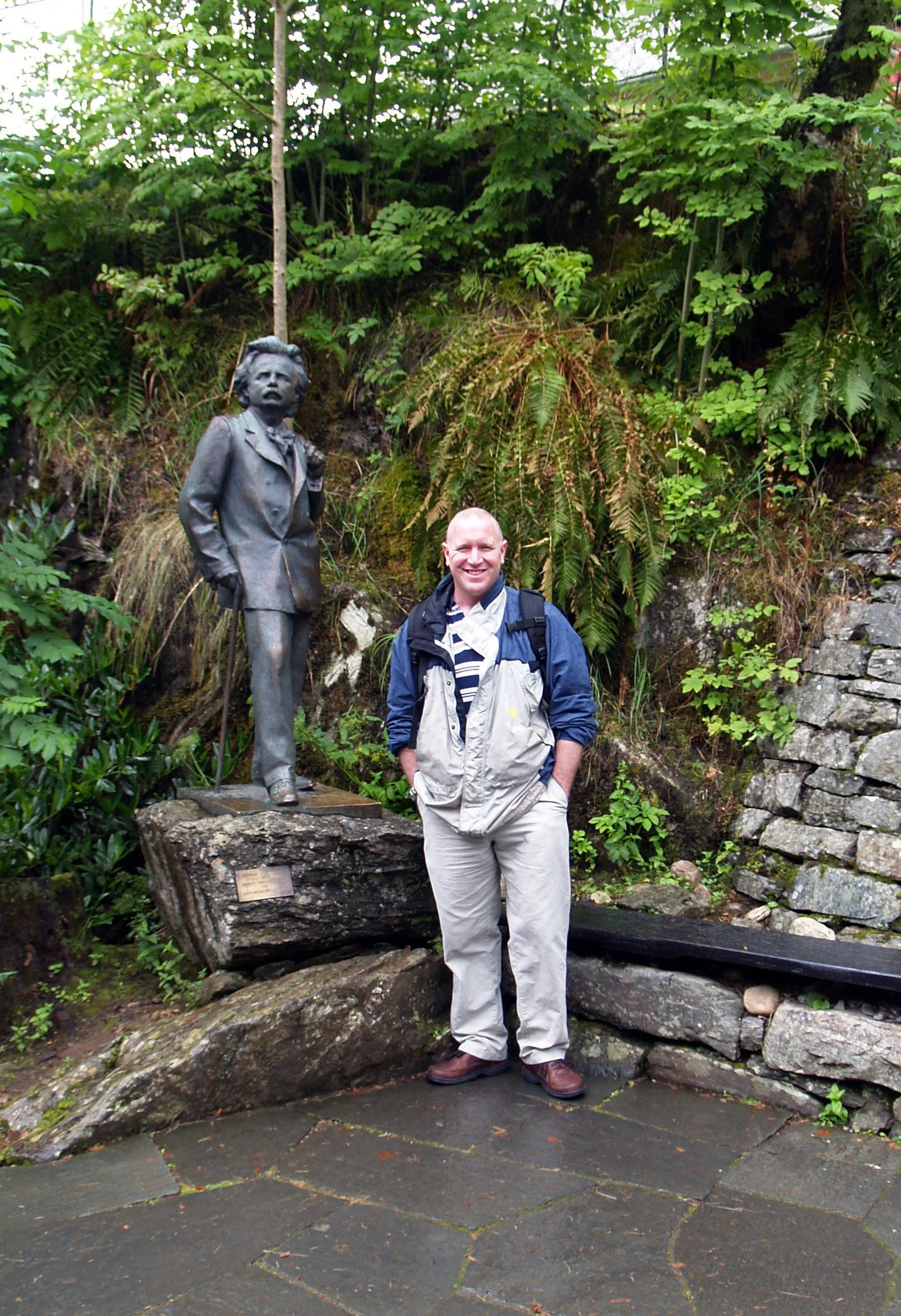
The third picture is a statue of the Norwegian composer Edvard Grieg at his home, Troldhaugen, just outside of Bergen, Norway. I visited there in 2006 and toured his home and museum. What a treat! The nearby views of the fjords were stunning! The fourth picture is of King’s Bridge and King’s College Chapel in Cambridge, England. This is probably one of my favorite cities in the world. It’s idyllic, charming, beautiful, and houses one of the world’s best choirs, which performs free Evensong services daily throughout the year (except in summer). Finally, the last picture features the gravesite of legendary French composer Hector Berlioz, of Symphonie Fantastique fame. He is buried at the Cimetière de Montmartre, in Paris, France, which I visited back in 2008. Visiting a composer’s residence, birthplace, museum, or gravesite gives you a better understanding of that composer, which in turn improves your interpretation of their work when you perform. Visiting these amazing sites is a treat, and it also makes us better musicians.
My essential gear for a disaster-free journey
Logistics
Create an itinerary that includes:
🎶 A daily schedule including all rehearsal and performance times
🎶 All logistical information on: transportation, lodging, performance venues, and confirmation numbers
🎶 Crucial contact information for your points of contact at each venue
🎶 Availability of food/conveniences near hotels and performance venues (hours, locations)
Clothing
Helpful tips:
🎶 You will want to check the weather forecast for the area you’re visiting to plan your wardrobe accordingly
🎶 Always a good idea to wear layers or bring a jacket: it could be hot outside and cold inside your performance venue, or vice versa
🎶 Wear comfortable clothes to your sound check
🎶 Bring a portable steamer: no one wants to look rumpled onstage
Tech gear
Useful items:
🎶 Tablet/music reader with charger and/or battery bank plus a tablet stand
🎶 Kindle: save space in luggage by storing scores/reading materials on an e-reader; also upload these items to cloud storage
🎶 Noise-canceling earbuds and charger
🎶 Portable recorder for archiving rehearsals and concerts
Personal Items
Do not forget to bring:
🎶 Important travel documents, such as passports, IDs, boarding passes, and train/bus/ferry tickets
🎶 Water bottle
🎶 Snacks (in case of delays)
🎶 A good book or E-reader, if there are delays
My Traveler’s Checklist
Sign up for the CMP Monthly Newsletter and receive my free Traveler's Checklist.
After reading this blog post, you might be inspired to purchase some exceptional, high-quality, hand-crafted digital download sheet music arrangements for clarinet quartets, woodwind quartets, clarinet quintets, woodwind quintets, or clarinet choirs.
Craig Music Publishers is your go-to source for these meticulously hand-crafted arrangements for winds.
Support a veteran-owned business and give your audiences an evening of great music by purchasing digital downloads from our Shop, organized by ensemble type for your convenience.

Music Trivia Answers
First question: What is the most common type of mishap that traveling musicians experience?
According to The Strad, an online classical music news service, the loss of an instrument is the most common mishap for musicians when traveling (2). Whether it is due to theft, accidentally forgetting the instrument or crucial accessories (this happens more than you would think), drastic environmental changes that could affect wooden instruments, or border/customs delays, this serious issue can be a dealbreaker. In fact, for those of us who play larger instruments, such as bass clarinet, double bass, or tuba, boarding a plane can often be a dreaded experience. Many musicians have been denied boarding because of the size of their instrument, regardless of whether they bought a ticket for it. In fact, the EU is meeting to discuss this critical issue as recently as February this year (see the article in the Strad below)(2). For a great read on musicians’ mishaps, check out the Horvath article below for some more juicy tidbits (1).
Horvath, J. (2021, July 10). Wardrobe malfunctions, forgotten instruments, and more: Eight classical musician mishaps. Interlude. https://interlude.hk/music-and-bows-and-clothes-oh-my-more-musician-mishaps/
The Strad. (2026, February 25). EU meeting tackles musicians’ air‑transport challenges. https://www.thestrad.com/news/eu-meeting-tackles-musicians-airtransport-challenges/20932.article
Second question: What are the most crucial items a musician should pack when going on a concert tour?
According to several sources, including the Manhattan School of Music, Interlude HK, Music Contact International, and professional violinist and YouTuber Ray Chen, protection for your instrument (hard-shell cases, humidifiers, etc.)(1), appropriate travel documents (including passports, boarding passes, AND travel insurance)(2), and a healthy body (3) are the most crucial items to bring with you on a concert tour. Being prepared is crucial to the success of a traveling musician. Having an appropriate hard-shell case, the crucial accessories to do your gig, and excellent humidifiers to keep your wood instrument safe are all critical to the success of your tour. If you are traveling domestically or internationally, having your passport, boarding basses/tickets, and especially travel insurance, will help ensure you have a less stressful trip and can get where you need to go. Finally, staying physically and mentally fit when traveling is important to a successful tour. Whether flying, driving, or riding on a bus, train, or ferry, traveling can be physically and mentally taxing. Eat tasty, healthy meals, bring your vitamins and meds, stay hydrated, and make time for a daily workout session or a walk/run in the local area. Your body will thank you, and you will be better prepared for the mental and physical challenges of a musical performance.
Chen, R. (2024, July 18). 10 MUST TRAVEL Musician Items ✈️. YouTube. https://www.youtube.com/watch?v=o6uj8CT9UQQ&t=10s
Gall, M. (2017, August 17). Tips for musicians: Performing abroad. Manhattan School of Music. https://www.msmnyc.edu/news/tips-for-musicians-performing-abroad/
Music Contact International. (2025, November 14). Packing like A pro: Essentials for student music travel abroad. https://www.music-contact.com/packing-like-a-pro-essentials-for-student-music-travel-abroad/
Third question: What are some good resources for domestic or international travel advice?
For domestic travel, the Transportation Security Administration (TSA) has an informative website with travel tips, including a travel checklist (3). They also offer a helpful What Can I Bring? page, with a searchable listing of all the legal items you can take in your carry-on luggage through TSA screening at U.S. airports. For the best-selling guidebooks on the U.S., Lonely Planet has you covered, with national, state, and city guides (1). Another option is to use Facebook travel groups or online discussion boards like Reddit, Quora, TripAdvisor, or the Rick Steves Travel Forum. But please keep in mind that these boards do not contain curated, accredited information; they represent the opinions of people who may or may not be qualified to discuss those issues. That said, the Rick Steves Travel Forum features a special brand of traveler - a RickNick. A Rick Steves fan who loves to travel. I have found great advice on this forum, especially if your question is not covered elsewhere on the website.
For international travel, a good starting point would be the U.S. State Department’s Travel website (4). This website has information on passports, VISAs, and international travel alerts. It would also be a great idea to register for their free Smart Traveler Enrollment Program (STEP), which provides the state department with your travel itinerary and allows them to accurately notify you if an emergency develops in your destination country. They also offer updates about health, weather, safety, and security for your destination. I have used this service several times and have always found it very useful. Another outstanding resource for international travel, specifically to Europe, is the American travel guru himself, Rick Steves. His exceptional website is packed with free information on international travel, including tips on planning and research, transportation, money, packing, tech needs, and other topics. His tips on packing light are particularly invaluable, including a section for women’s travel essentials (2).
Lonely Planet. (n.d.). USA. https://shop.lonelyplanet.com/collections/usa
Rick Steves’ Europe. (2026). Travel tips. https://www.ricksteves.com/travel-tips/packing-light
Transportation Security Administration. (n.d.). Travel tips | Transportation Security Administration. Travel Tips. https://www.tsa.gov/travel/travel-tips
U.S. Department of State. (n.d.). Travel.State.Gov. https://travel.state.gov/content/travel.html
Thanks for taking the time to stop by and read my blog. I hope you enjoyed my musings on music and travel. I will be back in two weeks with more anecdotes, memories, and passions for music. In the meantime, you can listen to one of my new wedding music arrangements for woodwind quintet of Mendelssohn’s “Wedding March” from A Midsummer Night’s Dream by clicking on the MP3 player below. It is part of our new CMP Wedding Music Collection. Click here to purchase the collection from our Shop. If you have not yet spoken up, tell me in the comment section below what your favorite musician’s travel essential is or which arrangements you might be interested in seeing on CMP. We would love to hear about it. Thanks for stopping by. See you in my next blog!
12 Jun 2026
Cover art for CMP Wedding Music Collection - for Woodwind Quintet
