
Blog Post 21: Bach
Jesu, Joy of Man’s Desiring - for Woodwind Quintet
Plus! Anecdotes on Bach’s time in Leipzig, germany
Thanks for stopping by, and welcome to my blog! I hope you had a great week. In this blog post, I will discuss my new digital download arrangement for woodwind quintet of “Jesu, Joy of Man’s Desiring” from Johann Sebastian Bach’s classic Cantata BWV 147 “Herz und Mund un Tat und Leben.” I will also share some anecdotes and pictures about Bach in Leipzig, Germany.

Johann Sebastian Bach:
“Jesu, Joy of Man’s Desiring” from Cantata BWV 147 “Herz und Mund und Tat und Leben,” for woodwind quintet.
Do you love this selection, or do you have another favorite Bach piece? Are you a fan of his legendary keyboard works? What about his multiple cantatas? Or maybe his Cello Suites? We are interested in your feedback. Please share your ideas and thoughts about Bach in the comments below.
Click here to learn more about this Bach woodwind quintet arrangement in our Shop.
By the way, have you performed any of our CMP arrangements? If so, we would greatly appreciate it if you could leave a review. Click here to leave a review/comment on my CMP YouTube Channel. If you have posted a YouTube video of a CMP arrangement, do not forget to tag us on your channel, and we will tag you back. Thanks so much! Happy practicing!
Before we continue, here are three music trivia questions about Bach to challenge you; I will reveal the answers towards the end of this blog post. I hope you enjoy them.
First, who preceded Bach as Thomaskantor at the world-famous Thomaskirche in Leipzig, Germany, and why did his predecessor leave that post?
Second, which two famous musicians were also considered for the Thomaskantor position at the Thomaskirche, ahead of Bach’s selection, both of whom turned the job down?
And third, what was the first work Bach premiered as newly-appointed Thomaskantor at the Thomaskirche in Leipzig in 1723?
Tell me your answers in the comments below, or feel free to share any other interesting musical facts you might know about Bach or this amazing composition. Now, let’s continue with the topic at hand.
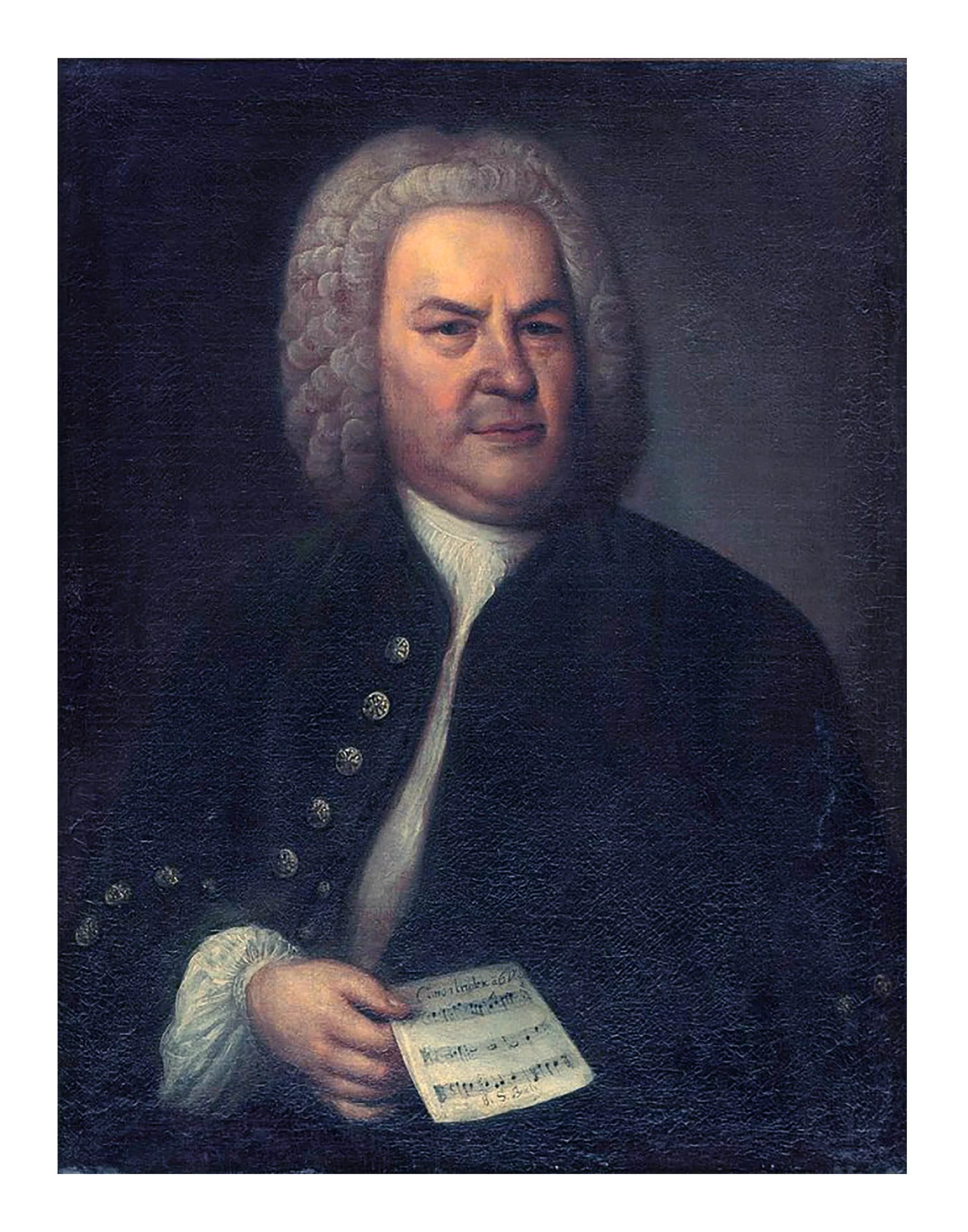
Here is a 1748 photo of the composer Johann Sebastian Bach, a portrait by Elias Gottlob Haussmann. Bach is holding a copy of the six-part canon BWV 1076.
Public Domain (Wikimedia Commons)
Bach in Leipzig
Bach first came to Leipzig in 1723, after a five-year position as Court Kapellmeister at the princely court of Anhalt-Cöthen. Bach became the Thomaskantor for the Thomaskirche, Leipzig, in 1723 after the death of Johann Kuhnau, the previous Thomaskantor, who died in June 1722. Bach was actually the third choice for the job. After the initial audition, the position was offered to Georg Philipp Telemann, Director Musices in Hamburg, who, in turn, received a raise and decided to remain in Hamburg. Then Bach auditioned for the position, along with Georg Friedrich Kauffmann, Court and Cathedral Organist at Merseburg, Christoph Graupner, Kapellmeister in Darmstadt, and Georg Balthasar Schott, organist at the Neuekirche in Leipzig. This time, Graupner was selected, but could not be released from his current position. So, Bach was their third choice, and when offered the position, he accepted. He moved to Leipzig in 1723 with his wife and four children. (1)
As Thomaskantor, Bach oversaw four churches, including the Thomaskirche, the Nikolaikirche, the Peterskirche, and the Neuekirche from 1723 till his death in 1750. Plus, he taught music at the Thomanerschule to the 55 Thomaners or boy choristers. He was responsible for the music services at all four churches and for all civic music in Leipzig as its Civic Music Director. These first two years were prolific for Bach. He wrote roughly 60 cantatas each year, plus a second version of his Magnificat in E-flat major, the St. John’s Passion, and a new Sanctus for Christmas 1724. Bach’s works were sung specifically by the Thomanerchor, with the other three choirs usually singing music from other composers. Additionally, while in Leipzig, Bach composed his most famous church music, including the Christmas Oratorio, the St. Matthew Passion, and the Mass in B minor. (1)
Bach’s additional duties included serving as music director to the university and conducting quarter-day orations (services held four times a year that required accompanying music) and ‘old’ services (liturgical services) in the Paulinerkirche, the University church. Although he is now well known worldwide for his contributions to Leipzig and the Thomaskirche, he faced considerable trouble with the town council throughout his tenure in Leipzig and had to regularly fight for individual rights in his position. Fortunately, this difficult period offered us the iconic Cantata BWV 147 “Herz und Mund und Tat und Leben.” (2)
Thomanerchor Leipzig. (n.d.). History of the Thomanerchor Leipzig (St. Thomas Choir of Leipzig). Thomanerchor. https://thomanerchor.de/en/about-the-choir/our-history/
Wolff, C., & Emery, W. (2024, February 21). Bach, Johann Sebastian. Grove Music Online. Retrieved 25 May. 2026, from https://www.oxfordmusiconline.com/grovemusic/view/10.1093/gmo/9781561592630.001.0001/omo-9781561592630-e-6002278195.
a few Bach treats
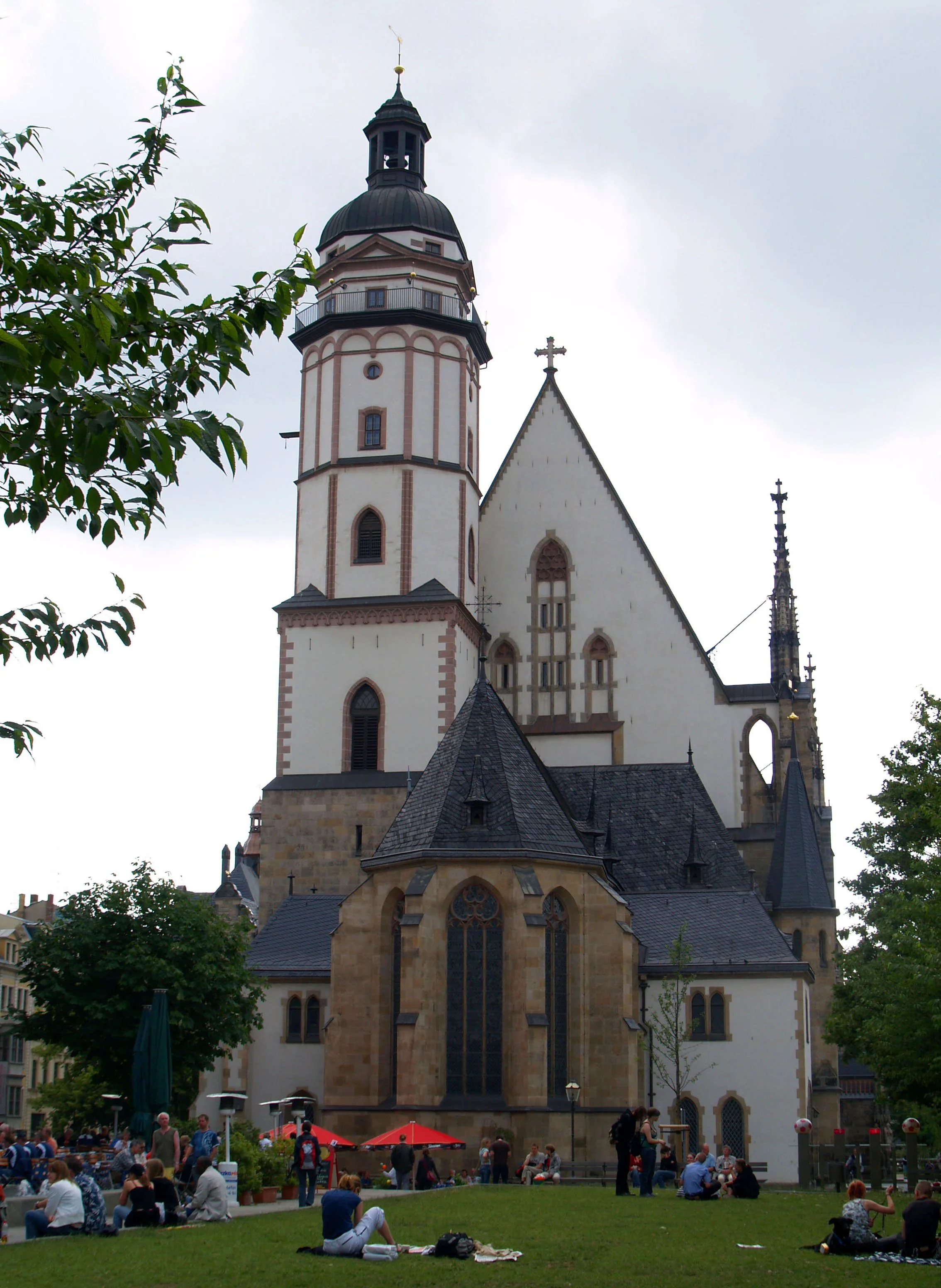
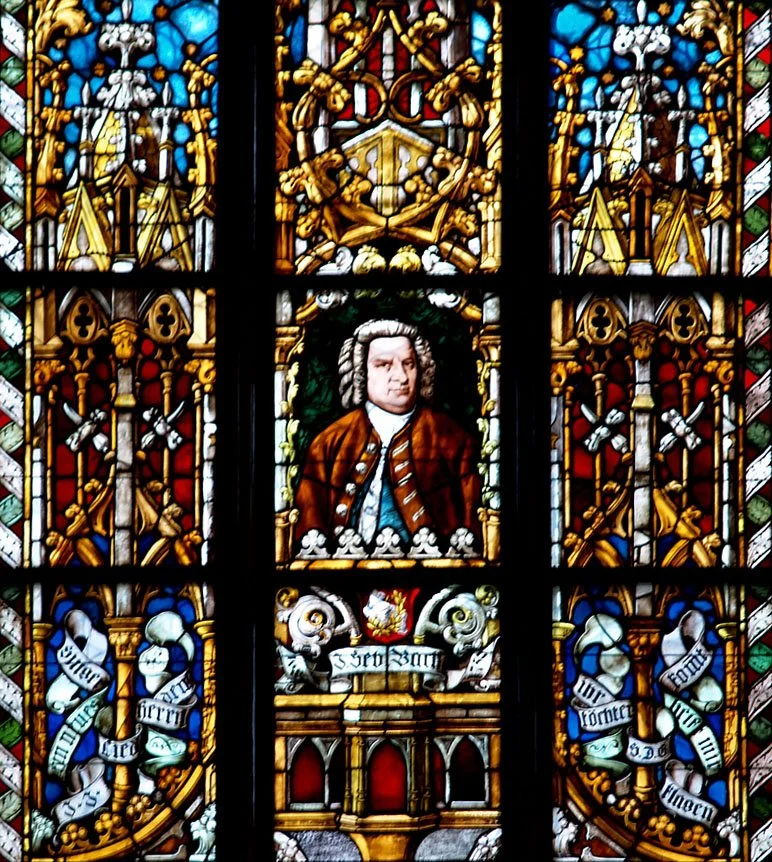

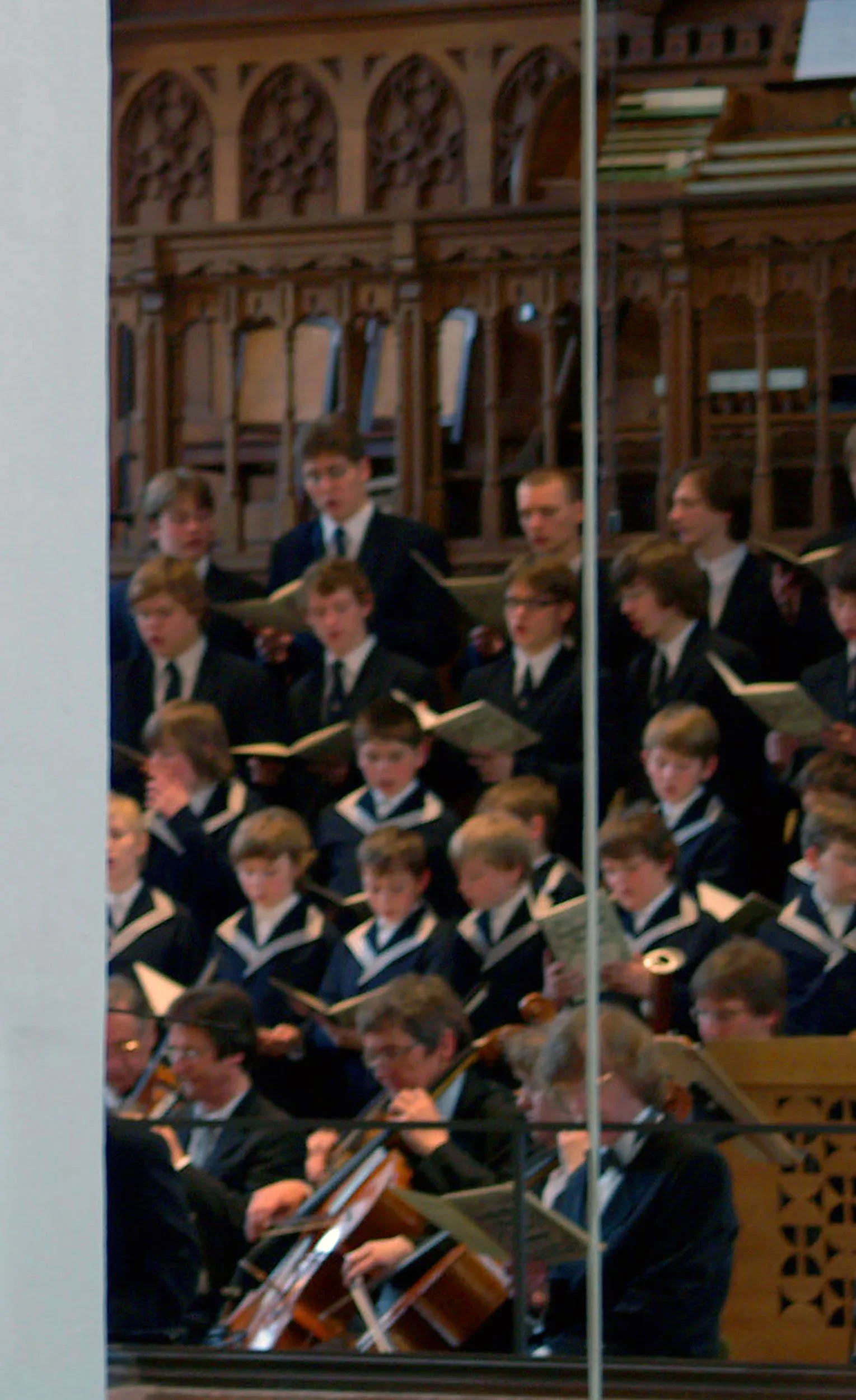

These pictures were taken during my visit to Weimar, Leipzig, and Naumberg, Germany, in June 2006. At the time, I was a clarinetist in the United States Air Forces in Europe Band, stationed at Sembach Air Base, in southern Germany. That June, I received a four-day pass and decided to visit my mentor and former teacher, Dr. Carol Reynolds. She was one of the music history professors at Southern Methodist University in Dallas, Texas, where I completed my undergraduate degree in music. Dr. Reynolds had an apartment in downtown Weimar, Germany, where she spent summers with her family, and invited me to visit her during this four-day pass. Together with her family, we explored Weimar and took day trips to Naumburg and Leipzig. Interestingly enough, the day trip to Leipzig coincided with a World Cup (soccer) game, and we found lively, boisterous crowds all over town.
On our day trip to Leipzig, we visited the Gedenkstätte Museum in der „Runden Ecke“ (where we learned all about the home of the former East German secret police or Stasi); toured the Mendelssohn Haus Museum (in one of his former residences); happened upon a parade in honor of the World Cup Game between France and Korea taking place that day in Leipzig; explored the world-famous Thomaskirche (see first picture above) with its Bach memorial (see third picture above), Bach stained glass (see second picture above), and Bach statue (see fifth picture above); that evening, we attended a concert at the Thomaskirche (see fourth picture above). That performance featured the Thomanerchor with the Gewandhausorchester, Leipzig. They performed the Motett “Jesu, Meine Freude” and Cantata BWV 39, Brich dem Hungrigen dein Brot ("Give the hungry thy bread.") Although we had a restricted view, it was a wonderful performance and a treat to hear one of Bach’s works (BWV 39) performed in situ.
Bach: Cantata BWV 147 and “Jesu”
Johann Sebastian Bach, the master of counterpoint, harmony, and melodic invention, wrote his Cantata BWV 147 “Herz und Mund und Tat und Leben” in 1723 while Thomaskantor at the world-famous Thomaskirche in Leipzig, Germany. This cantata was part of his first Leipzig Cantata Cycle, which included about 60 cantatas, all dating from 1723-1724. This cantata has two main parts with ten movements, and is originally scored for four solo vocalists, choir, two oboes, trumpet, violin, viola, and basso continuo. Within this Baroque Advent cantata is the musical gem, “Jesu, Joy of Man’s Desiring”, a chorale based on 17th-century German violinist and composer Johann Schop's psalm melody. This tune has become an international favorite, played instrumentally and sung in German or English.
This famous chorale has been arranged and transcribed for instruments ranging from classical guitar to brass ensembles, piano to woodwind quintets, pipe organ to string sextets, harp solo to jazz band, and clarinet trio to symphonic band. The tune has been recorded hundreds of times by a wide range of artists, including Peter Hurford, Marie-Claire Alain, and E. Power Biggs on organ, Christopher Parkening and Leo Kottke on guitar, Leon Fleischer and George Winston on piano, Sir David Willcocks & The Academy of St Martin in the Fields (on orchestra), Anne Akiko Meyers on violin, Jon Baptiste on piano with jazz combo, Wendy Carlos on Moog synthesizer, and the list goes on. It was even adapted by the pop group The Beach Boys for their 1979 hit “Lady Lynda.” (2)
Many Americans listen to this Bach tune at Christmastime, but it is also frequently used at weddings in the U.S. and around the world, plus it is often featured during Advent and Easter seasons. Originally written to celebrate the Feast of the Visitation, today it is used for secular and sacred events alike. We are fortunate that Bach’s music is so popular today. We have Felix Mendelssohn to thank for that. Bach’s music had begun to decline in popularity after his death, but in 1829, the German composer Mendelssohn staged a revival of Bach’s Saint Matthew’s Passion and sparked a new wave of interest in his music, leading to the publication of an authoritative catalog of Bach’s works.
Wolff, C., & Emery, W. (2024, February 21). Bach, Johann Sebastian. Grove Music Online. Retrieved 25 May. 2026, from https://www.oxfordmusiconline.com/grovemusic/view/10.1093/gmo/9781561592630.001.0001/omo-9781561592630-e-6002278195.
Wikipedia contributors. (2026, January 23). Jesu, Joy of Man's Desiring. In Wikipedia, The Free Encyclopedia. Retrieved 20:54, May 25, 2026, from https://en.wikipedia.org/w/index.php?title=Jesu,_Joy_of_Man%27s_Desiring&oldid=1334403103
Bach: Jesu, Joy of Man’s Desiring - for Woodwind quintet
Our CMP intermediate digital download arrangement for woodwind quintet of the classic "Jesu, Joy of Man’s Desiring" from Johann Sebastian Bach’s Cantata BWV 147 “Herz und Mund und Tat und Leben” is a staple of wedding music. It can be performed either before or after the ceremony. This piece is also great for recitals, graduations, holiday events, parties, and background-dinner-music gigs. This Baroque Era transcription is perfect for advanced high school quintets, college groups, amateur ensembles, and professional quintets. As always, I have included an alternate bass clarinet part in lieu of a missing bassoon.
As stated previously, Bach’s Cantata BWV 147 was written in 1723, during his early years as Thomaskantor (music director) at the world-famous Thomaskirche. This position has been one of the most prestigious musical posts in Germany for centuries. The Thomanerchor, which Bach conducted for over 25 years, dates to the 13th century. The choir still offers weekly services, motet concerts twice a week (which I had the privilege of seeing in 2006, see photos above), regular tours around the globe, and annual performances of Bach's Passions and Christmas Oratorio with the prestigious Gewandhaus Orchestra. This woodwind quintet transcription offers equally balanced parts; a full, well-orchestrated sound; and a 100% hand-crafted, NO AI-generated score. I hope you enjoy this unique setting for winds of a holiday and wedding music classic.
After reading this blog post, you might be inspired to purchase some exceptional arrangements for winds. But, where can I buy high-quality, hand-crafted digital download sheet music arranged for clarinet quartets? Woodwind quartets? Clarinet quintets? Woodwind quintets? Clarinet choirs?
Craig Music Publishers!
Support a veteran-owned business and give your audiences an evening of great music with high-quality, expertly hand-crafted arrangements by purchasing digital downloads in our Shop, organized by ensemble type for your convenience.

Music Trivia Questions
First question: Who preceded Bach as Thomaskantor at the world-famous Thomaskirche in Leipzig, Germany, and why did his predecessor leave that post?
According to the Thomanerchor website, Bach was appointed the Thomaskantor at the Thomaskirche in 1723, after a series of auditions. The position opened up when the former Thomaskantor, Johann Kuhnau, passed away in June 1722. Read all about these auditions under the CMP Blog Post 21 section, BACH IN LEIPZIG.
Thomanerchor Leipzig. (n.d.). History of the Thomanerchor Leipzig (St. Thomas Choir of Leipzig). Thomanerchor. https://thomanerchor.de/en/about-the-choir/our-history/
Second question: Which two famous musicians were also considered for the Thomaskantor position at the Thomaskirche, ahead of Bach’s selection, both of whom turned the job down?
The first audition for the Thomaskantor position in 1723 concluded with George Philipp Telemann, Director Musices in Hamburg, winning the audition. He was offered a raise in Hamburg and decided to stay there. The second round of auditions saw four other candidates vie for the position, including Bach. Christoph Graupner, Kapellmeister in Darmstadt, was ultimately offered the position, due to his professional status and the fact that he had studied at the Thomasschule; however, his current employer would not release him from his contract. Therefore, Bach became the third choice for this position, and he accepted the post after deciding to leave a five-year position as Kapellmeister at the princely court of Anhalt-Cöthen.
Thomanerchor Leipzig. (n.d.). History of the Thomanerchor Leipzig (St. Thomas Choir of Leipzig). Thomanerchor. https://thomanerchor.de/en/about-the-choir/our-history/
Third question: What was the first work Bach premiered as newly-appointed Thomaskantor at the Thomaskirche in Leipzig in 1723?
According to Grove Music Online, Bach premiered his latest cantata, Die Elenden sollen essen, BWV 75, on 30 May 1723 at the Nikolaikirche, Leipzig, in his first performance as Thomaskantor of the Thomaskirche. In this role, he was responsible for the music programs of four churches in Leipzig, including the Thomaskirche, Nikolaikirche, Peterskirche, and the Neuekirche. That performance helped celebrate the opening of the school year and landed on the first Sunday after Trinity.
Wolff, C., & Emery, W. (2024, February 21). Bach, Johann Sebastian. Grove Music Online. Retrieved 25 May. 2026, from https://www.oxfordmusiconline.com/grovemusic/view/10.1093/gmo/9781561592630.001.0001/omo-9781561592630-e-6002278195.
Thanks for taking the time to stop by and read my blog. I hope you enjoyed my musings on music. I will be back in two weeks with more anecdotes, memories, and passions for music. In the meantime, you can listen to my arrangement for woodwind quintet of Bach’s “Jesu, Joy of Man’s Desiring” from Cantata BWV 147 “Herz und Mund und Tat und Leben,” by clicking on the MP3 player below. Then click here to purchase it from our Shop. If you have not yet spoken up, tell me in the comment section below what your favorite Bach composition is or which arrangements you might be interested in seeing on CMP. We would love to hear about it. Thanks for stopping by. See you in my next blog!
29 May 2026
Cover art for J. S. Bach: Jesu, Joy of Man's Desiring - for Woodwind Quintet
