ISMN# 979-0-3071-0085-5
ASCAP WORK ID# 938168194
Enrich your repertoire with Three Sousa Marches--instantly downloadable for your next performance. This intermediate arrangement for woodwind quartet includes three selections by American “March King” John Philip Sousa:
🎶"The Black Horse Troop"
🎶"Hands Across the Sea"
🎶"The Washington Post"
These three iconic marches are perfect for recitals, contests, competitions, patriotic concerts, Americana events, pops concerts, or background-dinner-music gigs. They are short, engaging pieces that can break up a long program and give the ears a brief hiatus from some of the heavier pieces on the program.
🎶 The Black Horse Troop: Sousa wrote this march in 1924 due to his love of horses and dedicated it to the mounted troops of Cleveland’s famous Ohio National Guard Cavalry, known as Troop A. He was well acquainted with this Troop, which used only black horses, hence the name of the march. Sousa's association with them dated back to 1881, and he was himself quite an expert horseman. This was the first march I ever heard when I was a junior high school band student and have loved it ever since. The lilting melodies in its pleasing 6/8 meter, imitating the clip-clop of horse hooves, along with its energetic "dogfight" strain and upper woodwind obbligato, will make this American classic a definite hit with your audiences.
🎶 Hands Across the Sea: Sousa wrote this iconic march in 1899, inspired by an event in the Spanish-American War. The march was not written for one specific country, but all of America’s allies abroad. The title comes from a 1798 English play called The Rovers, written by John Hookham Frere and George Canning. Sousa was reading the play one night and came across the line “A sudden thought strikes me—let us swear an eternal friendship.” This line inspired Sousa to call his latest composition "Hands Across the Sea." One of the problems players often face in this march is the dotted-quarter-eighth-note rhythm in the Trio section. It is very easy to fall into the trap of playing these like triplets; they are not triplets. The rhythm needs to be crisp and accurate. Also, as you so often find in Sousa marches, in the last four bars before the "dogfight" at rehearsal numbers 13 and 17, particularly at 13, make sure to bring that decrescendo down to niente. That way, the fortissimo pickup notes to the dogfight will have better dynamic contrast and overall impact.
🎶 The Washington Post: This patriotic march was written in 1889 for a children’s essay contest sponsored by the venerable American newspaper, in an effort to gain favor with the public among several competing newspapers. It is a perennial favorite and will evoke memories of favorite American pastimes with your audiences. This classic, upbeat march in 6/8 time was written by John Philip Sousa and became an international hit because it was the perfect tempo for the newly introduced "two-step" dance, which had replaced the waltz as the popular dance of its day. This march is second in popularity only to our national march, "The Stars and Stripes Forever," among Sousa's marches. In this march, unlike many others, place your emphasis on the second beat rather than the first; Sousa used this feature in both “The Washington Post” and “Semper Fidelis.”
These three arrangements were written for professional, college, and advanced high school ensembles. I have included an alternate bass clarinet part in lieu of a missing bassoon for all three pieces. Originally scored for a full concert band, your audiences will love these unique settings for woodwind quartet of three iconic, thoroughly American Sousa marches.
Updated 29 Sep 2026
ISMN# 979-0-3071-0085-5
ASCAP WORK ID# 938168194
Enrich your repertoire with Three Sousa Marches--instantly downloadable for your next performance. This intermediate arrangement for woodwind quartet includes three selections by American “March King” John Philip Sousa:
🎶"The Black Horse Troop"
🎶"Hands Across the Sea"
🎶"The Washington Post"
These three iconic marches are perfect for recitals, contests, competitions, patriotic concerts, Americana events, pops concerts, or background-dinner-music gigs. They are short, engaging pieces that can break up a long program and give the ears a brief hiatus from some of the heavier pieces on the program.
🎶 The Black Horse Troop: Sousa wrote this march in 1924 due to his love of horses and dedicated it to the mounted troops of Cleveland’s famous Ohio National Guard Cavalry, known as Troop A. He was well acquainted with this Troop, which used only black horses, hence the name of the march. Sousa's association with them dated back to 1881, and he was himself quite an expert horseman. This was the first march I ever heard when I was a junior high school band student and have loved it ever since. The lilting melodies in its pleasing 6/8 meter, imitating the clip-clop of horse hooves, along with its energetic "dogfight" strain and upper woodwind obbligato, will make this American classic a definite hit with your audiences.
🎶 Hands Across the Sea: Sousa wrote this iconic march in 1899, inspired by an event in the Spanish-American War. The march was not written for one specific country, but all of America’s allies abroad. The title comes from a 1798 English play called The Rovers, written by John Hookham Frere and George Canning. Sousa was reading the play one night and came across the line “A sudden thought strikes me—let us swear an eternal friendship.” This line inspired Sousa to call his latest composition "Hands Across the Sea." One of the problems players often face in this march is the dotted-quarter-eighth-note rhythm in the Trio section. It is very easy to fall into the trap of playing these like triplets; they are not triplets. The rhythm needs to be crisp and accurate. Also, as you so often find in Sousa marches, in the last four bars before the "dogfight" at rehearsal numbers 13 and 17, particularly at 13, make sure to bring that decrescendo down to niente. That way, the fortissimo pickup notes to the dogfight will have better dynamic contrast and overall impact.
🎶 The Washington Post: This patriotic march was written in 1889 for a children’s essay contest sponsored by the venerable American newspaper, in an effort to gain favor with the public among several competing newspapers. It is a perennial favorite and will evoke memories of favorite American pastimes with your audiences. This classic, upbeat march in 6/8 time was written by John Philip Sousa and became an international hit because it was the perfect tempo for the newly introduced "two-step" dance, which had replaced the waltz as the popular dance of its day. This march is second in popularity only to our national march, "The Stars and Stripes Forever," among Sousa's marches. In this march, unlike many others, place your emphasis on the second beat rather than the first; Sousa used this feature in both “The Washington Post” and “Semper Fidelis.”
These three arrangements were written for professional, college, and advanced high school ensembles. I have included an alternate bass clarinet part in lieu of a missing bassoon for all three pieces. Originally scored for a full concert band, your audiences will love these unique settings for woodwind quartet of three iconic, thoroughly American Sousa marches.
Updated 29 Sep 2026

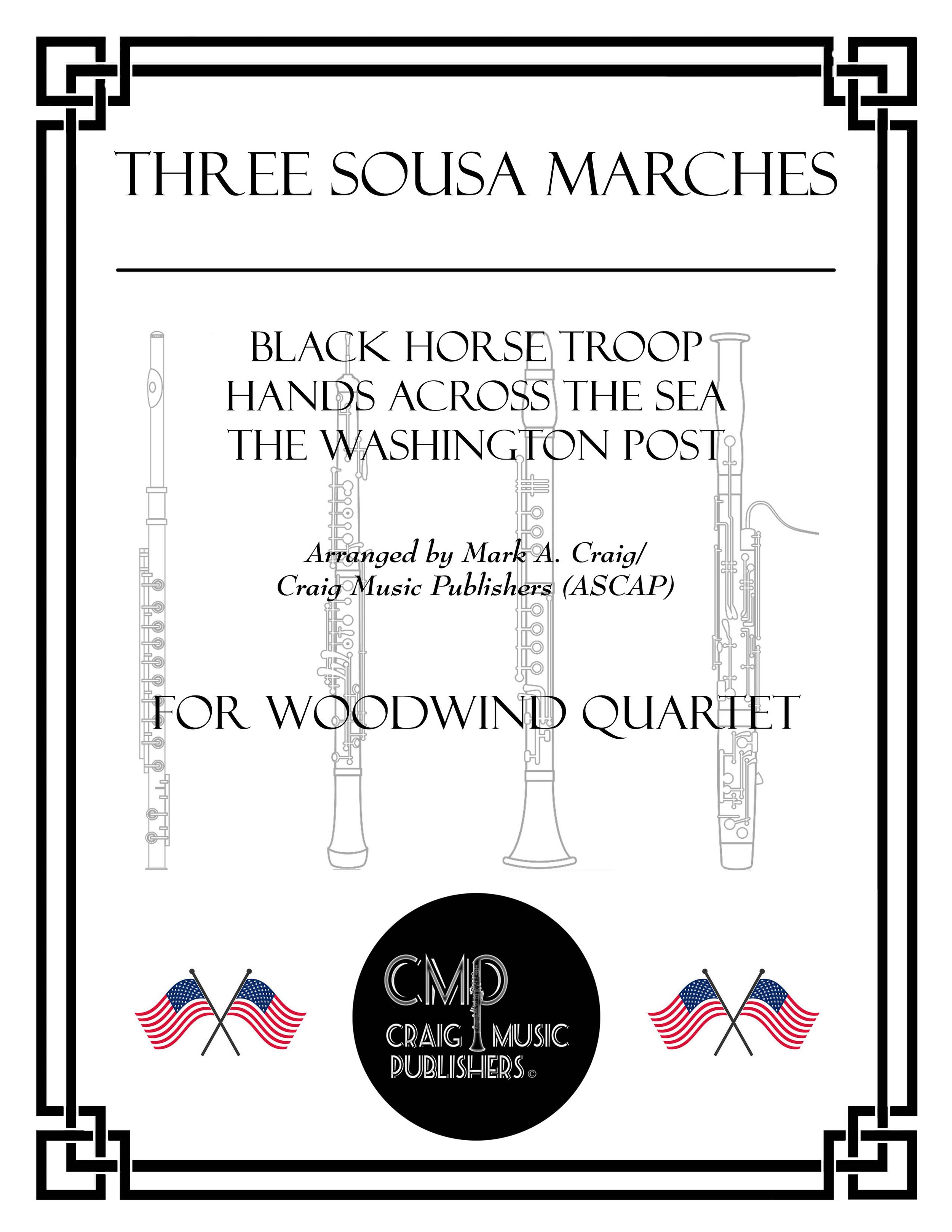 Image 1 of 1